
Beyond the ink: meet tattoo artist Tal Booker
Tal Booker: fine-line tattoo artist - London, UK
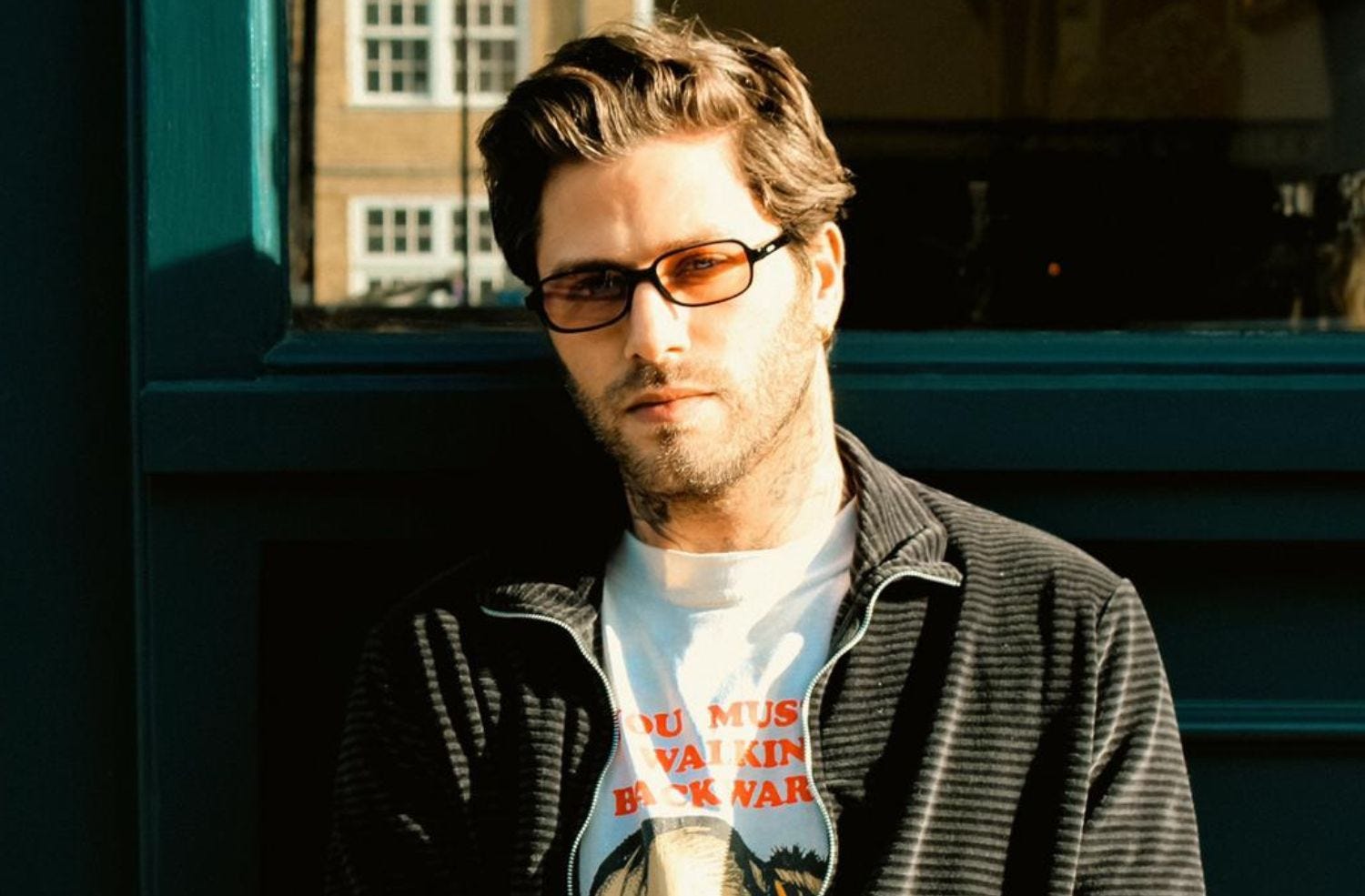
(While the article captures Tal’s story, nothing beats hearing it in his own words. Scroll down to the bottom to listen to the full, uncut conversation.)
Please note: this interview contains themes of suicide, drug use, addiction and mental health. If any of these affect you personally, please know that support is available – details at the end of the article.
“I started getting tattoos around the time of my recovery,” says Tal Booker. “I was probably getting one a week. I would go on my lunch break, pop into the studio, get a little something and go back to work straight after.” But then Covid hit and all the studios shut. “So, my bright idea was to get a machine from Amazon for £50.” He remembers thinking, “How hard can it be? I’ll just do them myself.” It turns out it’s really quite difficult. “And for that reason, I’m covered in a lot of bad tattoos!”
Things have come a long way since then. Tal’s now one of the most sought-after fine line tattoo artists in the UK, with over 52,000 Instagram followers, an impressive celebrity client list, and a waiting list of months (side note: don’t let this put you off, he’s worth the wait).
Despite his hard-won success, this hasn’t been an easy ride.
Alive
“For the longest time I wanted to be a vet,” remembers Tal. As a child, he had all sorts of pets – from lizards to frogs and tortoises. At one point he even had a hedgehog. But then he discovered drawing.
“I became quite obsessed with making art. I was always drawing.” He particularly loved tracing other people’s work – meticulously, for hours. “I had a real fascination with finding art I loved that wasn’t my own, and trying to recreate it in my own way.”
Perhaps the seeds were planted early? “Looking back, it’s kind of what I do on a day-to-day basis now.” But, perhaps unsurprisingly, becoming a tattoo artist wasn’t on his radar just yet. “I don’t think I was particularly career focused or had any big, grand dreams. I just enjoyed being creative. I felt most connected and most alive when I was creating something with my hands.”
Loss
The second of three boys, with a sister who came along a little later, Tal grew up feeling like he never quite fitted in. “As a young teenager and through my adolescence, I never really felt comfortable.” While his brothers were both very outgoing, he “struggled a lot socially”, leaning on his brothers and their friendship groups to hide the fact he didn’t have any friends of his own.
“I always had love from my parents – I come from a very loving family,” he’s keen to point out. Yet, despite this, something felt off. “There was some sort of malady within me that I couldn’t quite put my finger on.” Aged 16, he found himself, “Looking for ways to be more outgoing or be a part of something. I wanted a sense of belonging.” The solution, he thought, was to start smoking weed.
Then just a year later, his parents split up.
And around the same time, his cousin Gil died by suicide, aged 19. “That really shook my world.”
Gil was like a third brother to him; someone he looked up to. “It unlocked a new level of depression and sadness within me,” he says. “Suicide became something that I thought about a lot. It kind of became part of me. And I had this idea that if Gil couldn’t make it past 19 then I didn’t really know how I was supposed to.”
“I always had this thought in the back of my mind that if things got too tough, then that would be my way out.” And that thought never left him.
Hooked
Just a few years later, when Tal’s first long-term relationship broke down, he turned to cocaine. “It was everything I needed,” he says. “It made me feel part of something. It allowed me to be sociable in a way I never felt I was able to on my own.”
He was hooked from day one, “And I basically went on a six- or seven-year binge after that.”
For many, cocaine is a party drug. Not Tal. “It made me incredibly anti-social,” he says. “I’d go out with friends who were also using at the time, and I’d tell them I wasn’t. I’d go to the bathroom in secret and then leave early, having told everyone my night was over.” Then he’d go home and continue using, on his own. “It became a very lonely, solitary drug for me.”
And it wasn’t just the cocaine, “there was a whole world of addiction”. Despite not being into sports, he started gambling “as a bright idea for a quick way to make money to fund the cocaine.”
Rock-bottom
Having worked as a self-taught graphic designer since he left school, Tal now found himself at a crossroads. He had a good job and a great boss. But the addictions had left him in vast amounts of debt – far more than he could possibly repay – and all the secrecy around friends and family meant his relationships were breaking down. “I really couldn’t see a way out.”
Then something shifted. “I always tell this story because it’s kind of ironic,” he says. “I used to work in a WeWork, and they have something called the Wellness Room” – a private, lockable room where you can take a break. He’d gone in because he was “drowning in every sense” and realised he was left with two options: “One was to take my own life, because I couldn’t see a way out. The other was to call my mum, lay my cards on the table, and go from there.”
This wasn’t an easy decision, “I was absolutely terrified!” he says. “My mum’s a very energetic, powerful, compassionate, hard-loving woman. I really didn’t know how she was going to take any of this.” But there was no doubt in his mind, “Deep down, I knew that if anyone could help me, it would be her.”
So he picked up the phone.
Recovery
“She took a minute to process what I was saying to her.” In hindsight, Tal acknowledges the enormity of this moment: over the past six years, the family had slowly lost the son and brother they’d always known. Finally, there was something they could actually do. “I can’t speak for her, but I imagine there was a huge sense of relief.” He moved back in with her that evening.
The first step was rehab, which Tal agreed to. Although, initially, he didn’t actually want to get better, “My idea was I would do and say all the right things and kind of calm everyone down. And then I would just go back to using in a healthy way.” After all, it was his medicine: the only way he knew to manage his internal discomfort.
But rehab doesn’t work like that. Every evening for a month, Tal visited a non-residential day hub. “I describe it as like open heart surgery with plastic cutlery,” he says, “It was so raw and painful.” Over those four weeks, Tal felt like he’d been broken down and then rebuilt into a man he finally knew and understood. And at the end of the month, “I wasn’t ready to just go back out into the real world.” So, he repeated the cycle three more times, to make sure he felt strong enough to start living again.
Acceptance
Rehab was just the beginning.
Often, sobriety shines a light on things that have been masked by addiction. For Tal, it was his sexuality. “A big part of using was to numb those feelings,” he says, “I thought if I ignored them, they’d go away.”
But rehab had given him the strength to face this head on. “I just held my hands up and was like: you know what? I’ve got to address this as well. I can’t run from it because if I do, I might end up back where I was. And I never wanted to go there again.”
Seeing a tarot card reader was the unlikely turning point. She paused and said, “Something’s coming up for me around your sexuality – what’s that about?” It was the first time he’d ever felt safe enough to be honest and admitted, “You know what, I’m confused.”
His best friend, Sophie, played a huge part in Tal’s acceptance. “She’s gay – she was the first gay person I’d ever been close to – and there’s always been something so authentic about her, and so real. She just is who she is, in the best way.” He credits her for showing him how life could be. “I looked at Sophie and thought ‘I want to be like you’. And if that means being authentic and real, then this is something I’ve got to address.” And, with the unconditional support of his family and friends, he did.
He thought that was the last of it, but sobriety still had one more thing to reveal. A few years later, he got diagnosed with ASD (Autism Spectrum Disorder). “It was something I’d felt for a while. I’d done my research and taken every online test under the sun, and the results kept coming back the same.” So, he saw a professional and had it confirmed.
Perhaps in a similar way to accepting his sexuality, this provided greater clarity about who he was. Suddenly his struggles at school and in social situations all made sense. “It’s given me a deeper understanding of myself,” he says. “It made me quite emotional, in a positive way.”
This time, however, he wasn’t comfortable sharing his news. “I felt a bit embarrassed to be honest,” he says. “I was like, God, I’m going to have to tell my family there’s something else going on with me! And now everyone’s going to be bored of it, and I’m just going to be that guy that’s always getting diagnosed with something!” Of course, they didn’t see it like that.
And anyway, by then a new addiction had already taken centre stage.
Ink
Tal started getting tattoos around the time of his recovery. His skin became a canvas to document the things he struggled to communicate. “There was a level of storytelling about how I was feeling, or what part of the journey I was on. And I really loved that. I loved the permanence of it as well: that it’s a decision you make on a random Tuesday in April, and it’s with you until you’re grey and old, you know?”
Maybe this was a new type of high? Once Covid hit and Tal had his new tattoo gun, there was no stopping him. He started doodling on himself. “Then some of my friends wanted some too, and it became a thing I was doing in the evenings or on the weekends.” With such a strong background in drawing and design, it’s no surprise he “loved the process and the artistry”.
Yet, for years, he thought it was just a hobby. “It never entered my consciousness that this was something I could do as a career.”
Once again, he gives a shout out to Sophie.
Professionally, Tal hadn’t been having a good time. He’d stayed clean and sober but was struggling with depression and severe anxiety. Eventually, he was signed off work.
“Sophie said I should look into being a tattoo artist.” Tal initially dismissed the idea, “Because I had this idea of them all being big, burly, macho men with skinheads and face tats and stuff!” But she persisted, “She said, ‘Trust me. Just go and meet with this guy, have a chat, see how you feel and go from there.’”
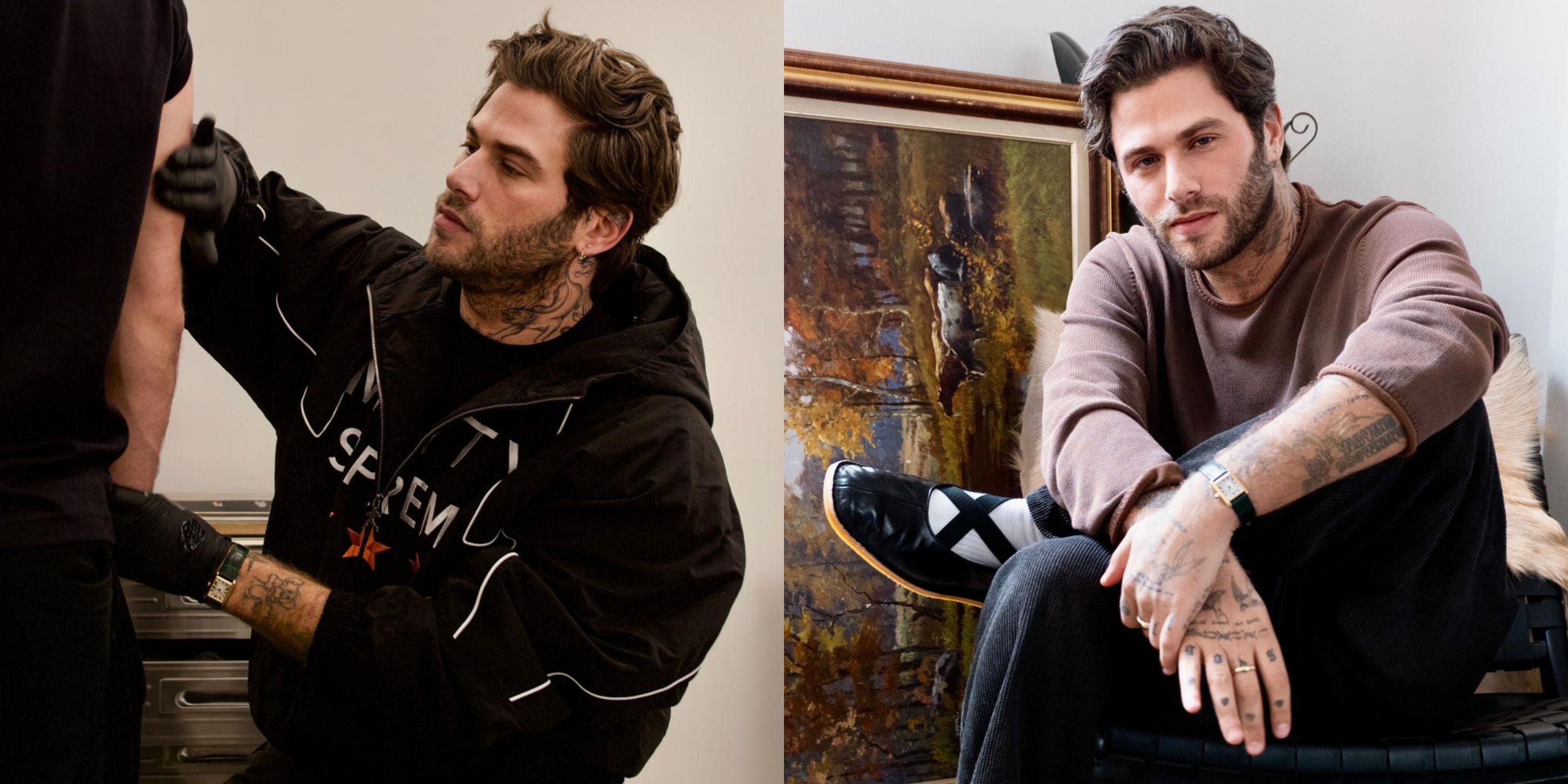
That was four years ago. “I never left the studio!”
Passion
While graphic design fed his creativity, tattooing gives him so much more. “I worked with a life coach a number of years ago,” he says, “We talked about what my ideal career would look like. And tattooing is it. No question.”
The things Tal wanted from work included connection, trust, expertise and creativity. Tattooing hits all the marks. “When someone comes to me and says, ‘This is what I want, what do you think?’ And for me to be able to verbalise my ideas, expertise and opinions, and for them to say ‘Yep, great, let’s do it’ – and not only let’s do it, but let’s put it on me forever – is more than I could ask for.”
Tattooing has become Tal’s life. “My best days revolve around work, because that’s where I get so much connection and so much meaning. I finish around 7pm, come home, make myself some dinner and go to bed, then do it all over again the next day.” He takes a beat. “My life isn’t that exciting!”
Has everything he’s been through changed the way he relates to people? “Definitely,” he says. “I think, going on my own journey, I’ve learned what I need from people. And in return I believe I give patience, kindness, warmth, understanding and self-disclosure – and all of those things enable connection.”
It’s clear he cares deeply about making his clients feel that sense of belonging and no-holds-barred acceptance he was always looking for himself. The tattoo chair is an unusually intimate space; people share things they might not say anywhere else. And Tal doesn’t take that lightly. “I value their time, the money they’re spending, and the end result,” he says. “When they’re in the studio with me, that’s their moment. And all that matters is them being happy with the job.”
Only recently has he started to accept that tattooing is something he’s really quite good at. And with characteristic honesty, he says, “The pride of my life is my work. It’s not only my work, it’s the connections I make with people.”
Hope
For Tal, connection is also what drives his work as an ambassador for CALM, the Campaign Against Living Miserably, a suicide prevention charity.
Having seen the devastating impact of suicide first-hand, and battled with his own demons for years, this is his way of offering hope – and an alternative future – for people who can’t see another way forward. “I don’t want anyone to feel like that, because I know how it feels. And having lost someone so close to me is earth-shattering.”
As an ambassador, he can help create “a break between someone feeling suicidal and someone attempting suicide.” It’s a tribute to Gil’s memory. He’s honest: he’ll never know if it would have helped Gil, “But it’s certainly what someone who’s struggling needs.” Sharing his own lived experience is part of this, “As I know what it feels like to not want to be here anymore.”
Tal’s advice to anyone struggling with negative thoughts comes from his time in therapy: tell someone. “Negative thoughts are like the monster under the bed. Talking is like turning on the bedroom light: it takes the power out of them and makes everything so much easier to deal with.” But he acknowledges it’s often not an easy path. And he doesn’t want anyone to lose hope.
“I’ve learned that sometimes pain, discomfort, upheaval and change in direction can be positive, although it may feel like the total opposite at the time. It’s obviously clichéd, but just trusting the process – and trusting that the universe is pushing you in the right direction – is really important. Just keep moving forwards. Even if it’s one step, three steps, a hundred steps… it’s all in the right direction.”
Purpose
Now seven years sober from cocaine and gambling – longer than he was addicted – Tal has finally found his purpose. He has no idea what the future holds but, “In this moment, sitting here with you, I can’t imagine doing anything else. I feel like everything I’ve gone through has led me to where I am now, which is beyond my wildest dreams,” he says. “My life looks incomparable to what it was.”
During our conversation, something else dawned on him: for years he had different versions of himself for different contexts – at work, with partners, friends, family, alone. “I think I’m slowly becoming one person.” He smiles. “It’s kind of cool. I’ve not thought about that till now.”
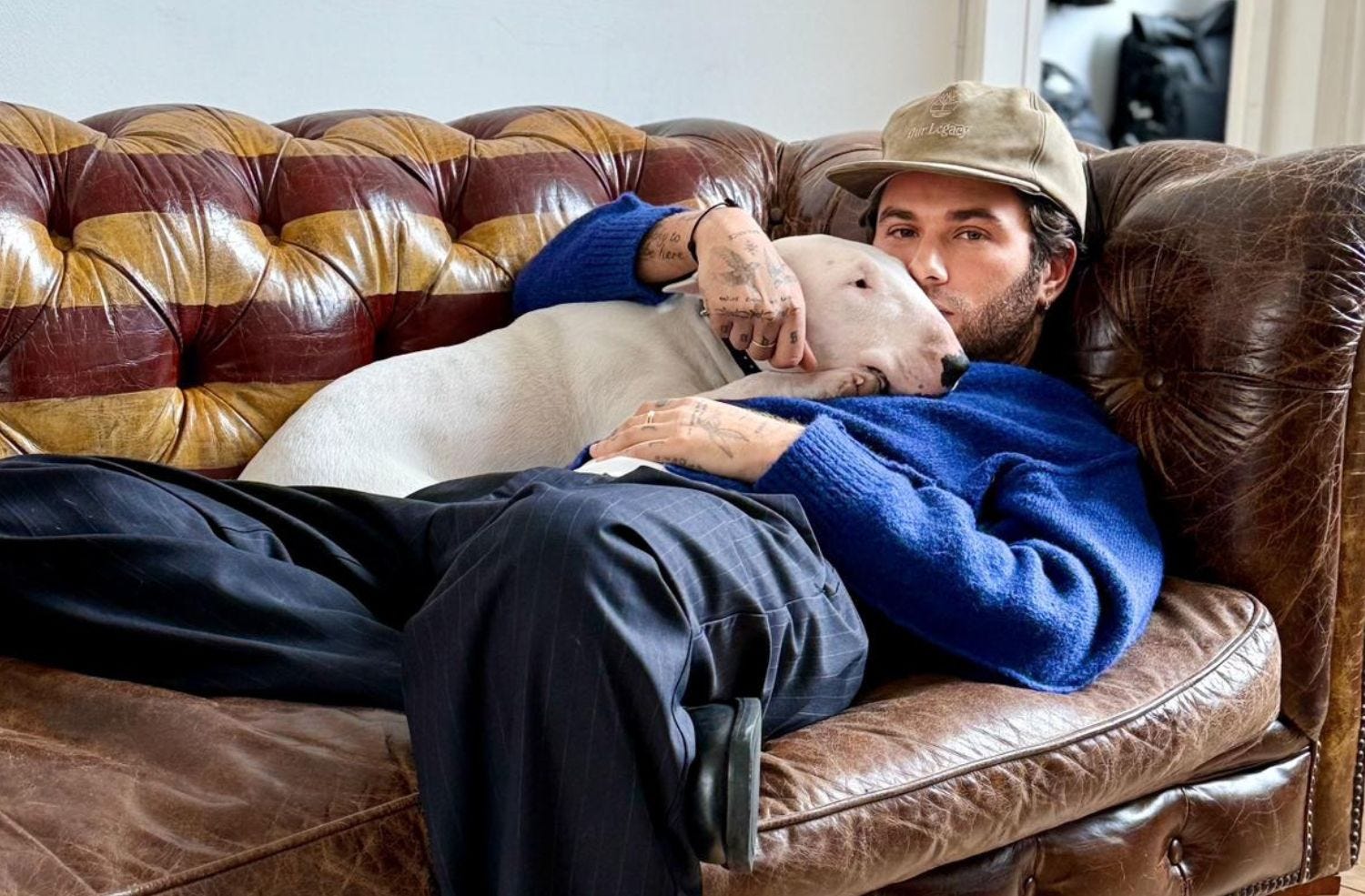
Things have come a long way since Tal’s childhood dreams of becoming a vet. So, what would his former self say if he could see him today? “I think he’d feel incredibly proud.” And he’d be happy that animals still play a big part in his life: Tal’s bull terrier, Bunny, is as much a part of the studio as he is himself.
“I often think about the younger version of me. And I think a lot of what I do now is for him,” he says.
“It’s like we’re still very much on this journey together, me and him. I never quite left him there.”
If you’re looking for an appointment with Tal Booker, get in line! I promise it’s worth the wait. You can get in touch with him through Instagram or his website.
And if you’re struggling with any of the issues covered in this article, please speak to a trusted friend or family member, your GP, or contact a national helpline.
UK:
International:
Uncut and unfiltered: the full conversation
Want to hear Tal's story in his own words? The full uncut conversation is here - and I'd strongly recommend it. There's a warmth and openness to the way he talks about everything he's been through that's difficult to capture on the page.
Enjoyed this read Lucy, you have a way of bringing people out of their shell. 🤗
I read this top to bottom the other morning, not realising it was your fine work Lucy! Hearing life-turnaround stories like Tal's is so inspiring... I often wonder what it is like to discover your purpose, passion and talent, having had to go through the proper tumbler to find it. Thanks for bringing his story to life.